


I’ve just discovered a miracle cure. It’s great for weight reduction and can improve dental health, lessen inflammation, increase nutrition, and smooth your metabolism.
It costs nothing; in fact, it reduces your costs.
The cure: curbing refined sugars.
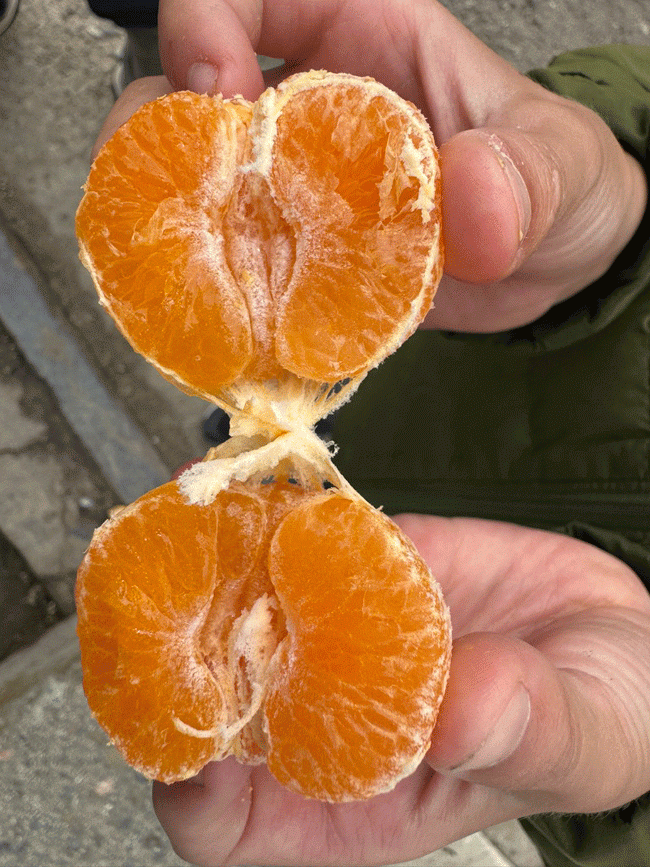
Craving something sweet to eat? Try fresh fruit. (Courtesy photo)
The discovery isn’t new, obviously, but the inspiration for my acting on it was a National Geographic article by Allie Yang about ultra-processed food.
It disturbed me enough to (mostly) sack sweeteners.
“We don’t realize that these are really killing people on par with what we’re seeing with things like alcohol and tobacco — leading to preventable deaths,” said Ashley Gearhardt, an associate professor of psychology at the University of Michigan.
More than half the food Americans consume can be classified as ultra-processed. Some processing is accomplished to preserve food’s shelf life. But many products are optimized specifically to activate the body’s fat and sugar sensors to release dopamine.
One study found that sugar increased dopamine levels by 135 to 140 percent.
Dopamine doesn’t increase pleasure, asserts Yang. Instead, it encourages us to repeat behaviors like eating that helped our ancestors survive.
“The more dopamine that’s released, the more likely we’ll repeat that behavior,” Yang writes. As many as 14 percent of U.S. adults and 12 percent of kids now suffer food addiction.
Food wasn’t always this way. When I was a kid, most meals — even “store bought” baked goods — were made with whole foods.
My mom was health- and cost-conscious, so our shopping cart rarely contained cookies, cakes or sodas. We were allowed to make any goodies we wanted.
In contrast, the industrially processed foods of today are composed of food extracts, such as starches and hydrogenated fats. Add in artificial flavors, emulsifiers and stabilizers, and you get food designed by manufacturers to be addictive.
Experts Gearhardt and Alexandra DiFeliceantonio argue that many processed foods are essentially pre-digested to maximize the speed of dopamine release.
The result reminds me of a cartoon I cut out long ago. It shows a distressed woman leaning heavily on the refrigerator. The caption reads: “Gladys in the third hour of her diet.”
Poor Gladys. We all know diets don’t work. There are better approaches to detoxing from processed sugars and fats. Societally, we can choose to ban certain additives from the manufacturing process.
We can treat processed foods with added sugar or fat like tobacco products, taxing them and limiting their marketing.
These restrictions have worked well for smoking in the U.S., which has shrunk by three-quarters since the 1960s.
However, if you don’t want to wait six decades for a societal solution, there are personal changes you can make. Simple hacks can tip you towards better health with less processed foods.
- Rate your hunger on a 1-10 scale before you eat.
- Start with a full glass of water. You may be more thirsty than hungry.
- Concentrate on fiber and protein, which provide the most satiety.
- Read the labels. Acknowledge your choices.
- Serve your portion – don’t snack from the package or dish.
- Use smaller plates, then fill half the plate with veggies first.
- Eat more slowly, allowing your brain time to register your fullness.
- Choose whole fruit when you want something sweet.
You’ll be choosing the miracle cure if you accomplish these tips without processed sugar. At that point you’ll also be savoring your sweet revenge against addictive foods and deceptive food manufacturing practices.
Karen Telleen-Lawton, Noozhawk Columnist
Karen Telleen-Lawton is an eco-writer, sharing information and insights about economics and ecology, finances and the environment. Having recently retired from financial planning and advising, she spends more time exploring the outdoors — and reading and writing about it. The opinions expressed are her own.